Frequently asked questions about cross stitch and Tatreez
Welcome to our guide on Tatreez Falahi — the art of traditional Palestinian embroidery — and its connection to modern cross-stitch techniques.
Whether you’re a beginner or an experienced stitcher, this FAQ explains everything from heritage to handy stitching terms.
What is Tatreez Falahi?
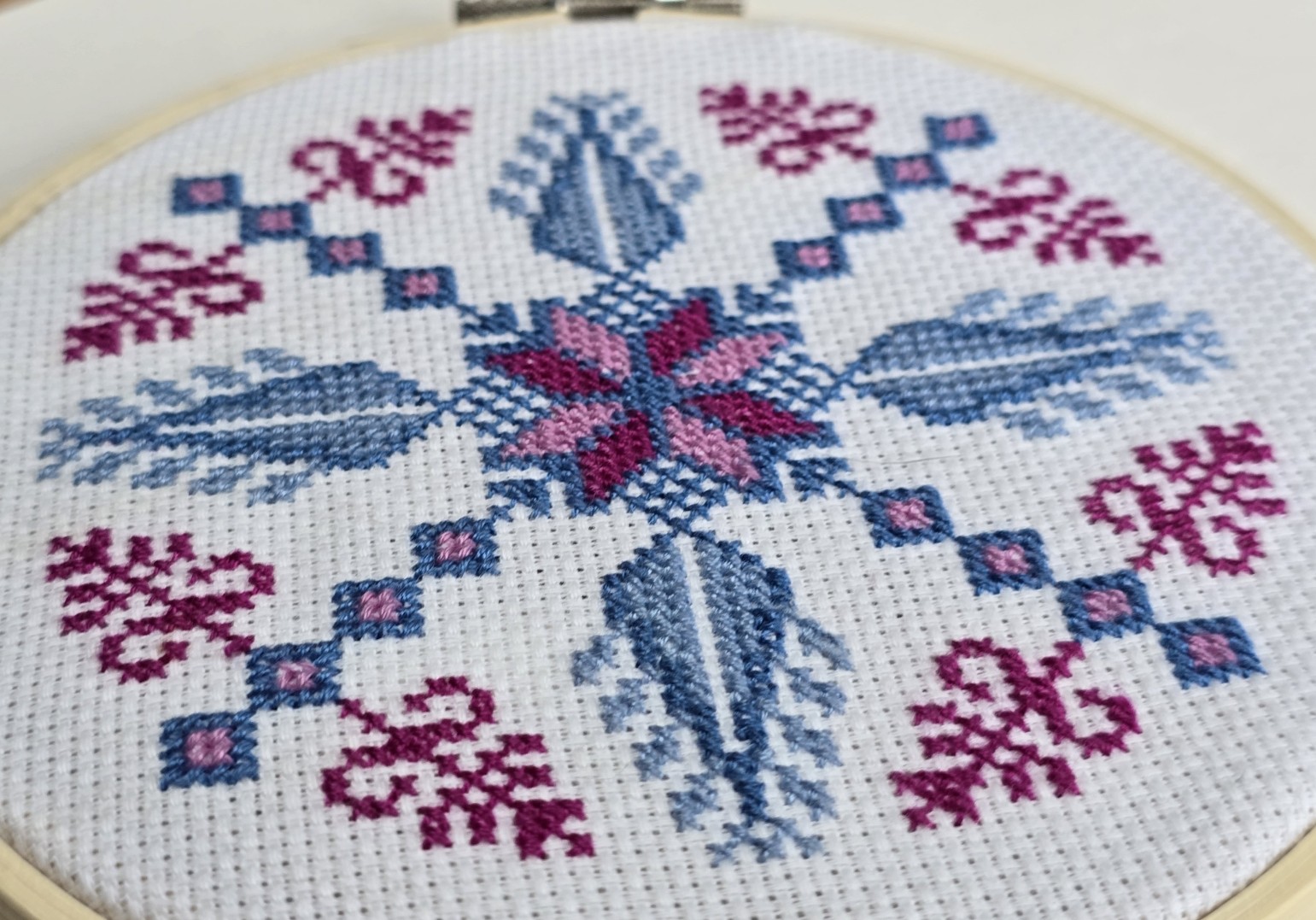
Tatreez Falahi commonly known simply as Tatreez, is a traditional Palestinian embroidery style originating from rural villages (falahi means “peasant” or “villager”). It reflects daily life, customs, and heritage, and is usually stitched by hand on dresses (thobes) and home textiles.
Recognized by UNESCO as Intangible Cultural Heritage , Tatreez symbolizes Palestinian identity and craftsmanship. The stitching technique is similar to cross-stitch, making it accessible for modern artisans using digital counted patterns.
How is Tatreez Falahi different from other Tatreez styles?
Tatreez Falahi is distinctive for:
Geometric patterns inspired by nature and village life,
Earthy tones such as brown, green, and red,
Simple yet meaningful designs reflecting community and heritage
References such as
Tirazain
document regional motifs and their cultural significance.
What fabrics and threads are used in Tatreez Falahi ?
Traditionally, Tatreez Falahi is stitched on linen or cotton using silk or cotton threads.
Modern adaptations often use Aida cloth and DMC floss, similar to cross-stitch, making it easier for beginners to follow digital patterns while maintaining traditional colors and designs.
What is Aida cloth?
Aida cloth is the most common fabric used for cross-stitch. It has evenly spaced holes that make counting stitches easy.
The fabric “count” (like 14-count or 18-count) tells you how many stitches fit in one inch — the higher the count, the smaller and finer your stitches will be
What is embroidery floss?
Embroidery floss (often called floss) is the thread used for cross-stitch. It’s a soft, glossy, six-strand cotton thread that you can separate depending on how thick you want your stitches to look.
Most patterns recommend using two strands for cross-stitch. Popular brands include DMC, Anchor, and Cosmo.
💡 Tip: Keep your floss neat by winding it on floss bobbins or storing it in labeled bags.
What is counted cross-stitch?
“Counted cross-stitch” means following a chart and counting fabric holes to place each stitch accurately.
Each square on the chart represents one “X” stitch on your fabric.
What does WIP mean
“WIP” = Work In Progress — any stitching project you’re currently working on but haven’t finished yet. Most stitchers have several WIPs at once!
What is a UFO?
“UFO” = UnFinished Object — a project you started but never completed. Many stitchers keep their UFOs tucked away for later inspiration.
What is a hoop or frame?
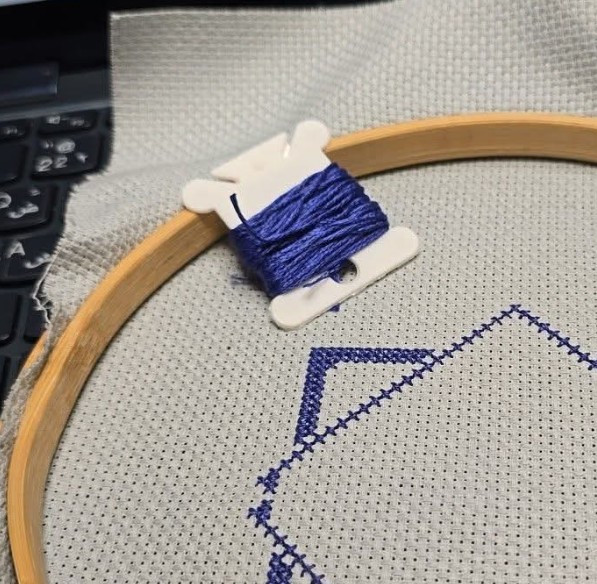
”A hoop” or frame keeps your fabric tight and flat while stitching. This maintains even tension for neater and more precise results.
What is backstitching?
Backstitching is a straight stitch used to outline shapes or add details after finishing the main cross-stitch.
It helps define edges and make designs pop.
What does “parking” mean in cross-stitch?
Parking is a technique used to manage multiple thread colors efficiently.
Instead of cutting off a thread you’ll need again soon, you “park” the needle in the fabric nearby to keep it ready for later use.
What is a needle minder?
A needle minder is a small magnet that holds your needle when not in use — keeping your workspace safe and tidy.
What is a chart or pattern?
A chart or pattern is your design map.
Each symbol or color on the chart corresponds to a specific stitch and thread color.
You count fabric squares to match your stitches to the chart.
What does “stitch count” mean?
Stitch count tells you how many stitches wide and high a design is (e.g., 80 x 100 stitches).
It helps you calculate the finished size of your project on your chosen fabric.
Use a
Cross Stitch Fabric Calculator
to find the finished size in centimeters and inches.
What is gridding?
Gridding means marking your fabric (usually every 10 squares) with washable pen or thread.
This helps you count accurately and avoid mistakes.
What does “frogging” mean?
A Frogging means removing stitches when you make a mistake. The name comes from “rip-it, rip-it”, like a frog croaking! 🐸 It’s a common and necessary part of stitching, everyone does it.
What is a floss bobbin?
A floss bobbin is a small card or plastic piece used to wrap and store embroidery thread.
It keeps your floss organized and prevents tangles.
What does “finishing” mean in cross-stitch?
Finishing is the process of turning your stitched piece into its final form — like framing, making a pillow, or creating an ornament.
What does “bury the thread” mean?
Burying the thread means securing the loose end by weaving it under nearby stitches on the back of your fabric instead of tying a knot.
This keeps your work smooth and professional-looking.
What is a loop start?
A loop start is a clean, knot-free way to begin stitching with two strands.
Fold one strand in half, thread the loose ends through the needle, pull through the fabric, and pass the needle through the loop on the back — secure and tidy!
What does blending mean in cross-stitch?
Blending is combining two different thread colors in the same needle to create smooth transitions or shading.
It’s perfect for natural effects like skin tones, flowers, or skies.
What is confetti stitching?
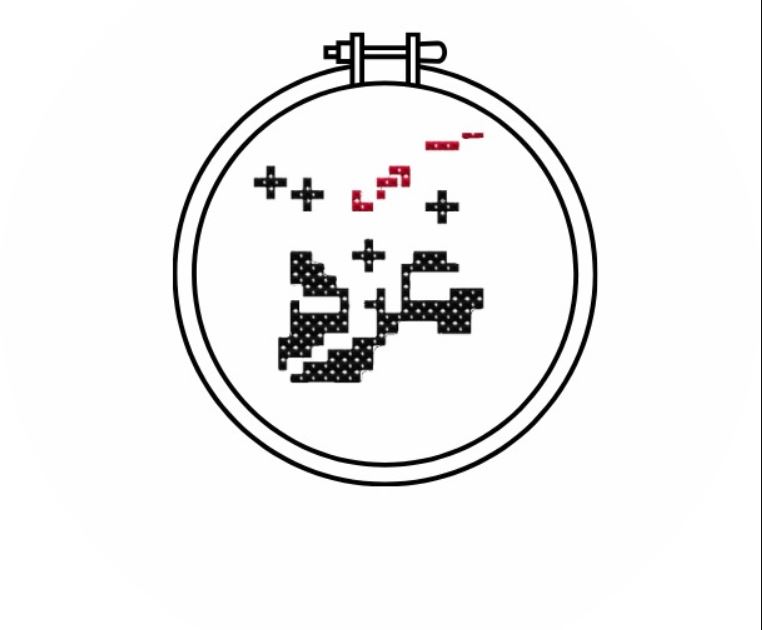
Confetti stitching refers to areas where many single stitches of different colors are scattered like little confetti 🎉
It adds depth and realism but requires patience.
💡 Tip: Work in small sections or “park” threads to manage confetti areas easily.
What does “floss chicken” mean?
“Floss chicken” is a playful term used by cross-stitchers and embroiderers. It describes the risky moment when you’re not sure if you have enough thread (floss) left to finish a section, but you keep stitching anyway, hoping it lasts.
What’s the difference between the English and Danish methods in cross stitch?
A: The English method means completing each cross (×) fully before moving to the next. It’s great for handling confetti stitches (scattered single stitches) and works well when using the parking method, as each stitch is finished right away. The Danish method, on the other hand, involves doing one half of each stitch (///) in one direction and then completing the other half (\\\) on the way back. It’s ideal for large blocks of color and suits those who prefer the sewing method or like stitching in hand without a hoop or frame.
What is confetti stitching?
Confetti stitching refers to areas where many single stitches of different colors are scattered like little confetti 🎉
It adds depth and realism but requires patience.
💡 Tip: Work in small sections or “park” threads to manage confetti areas easily.
What does FFO mean?
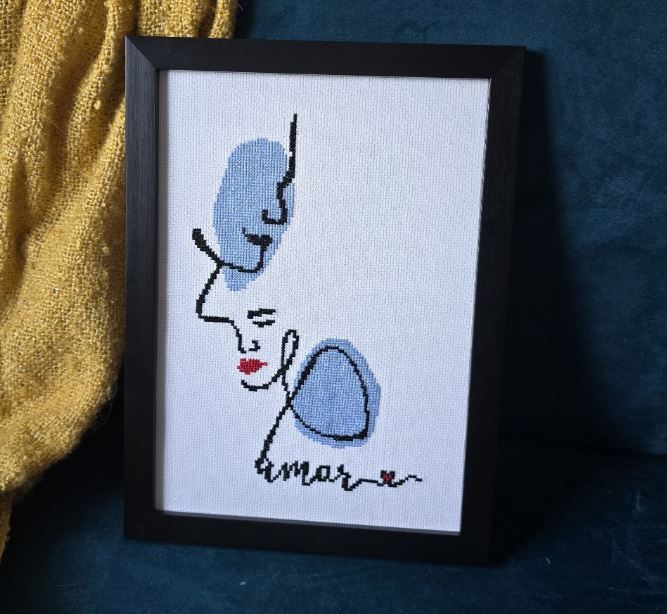
FFO = Fully Finished Object — a completed cross-stitch piece that’s been fully displayed or transformed
into its final form (like a framed artwork or pillow).